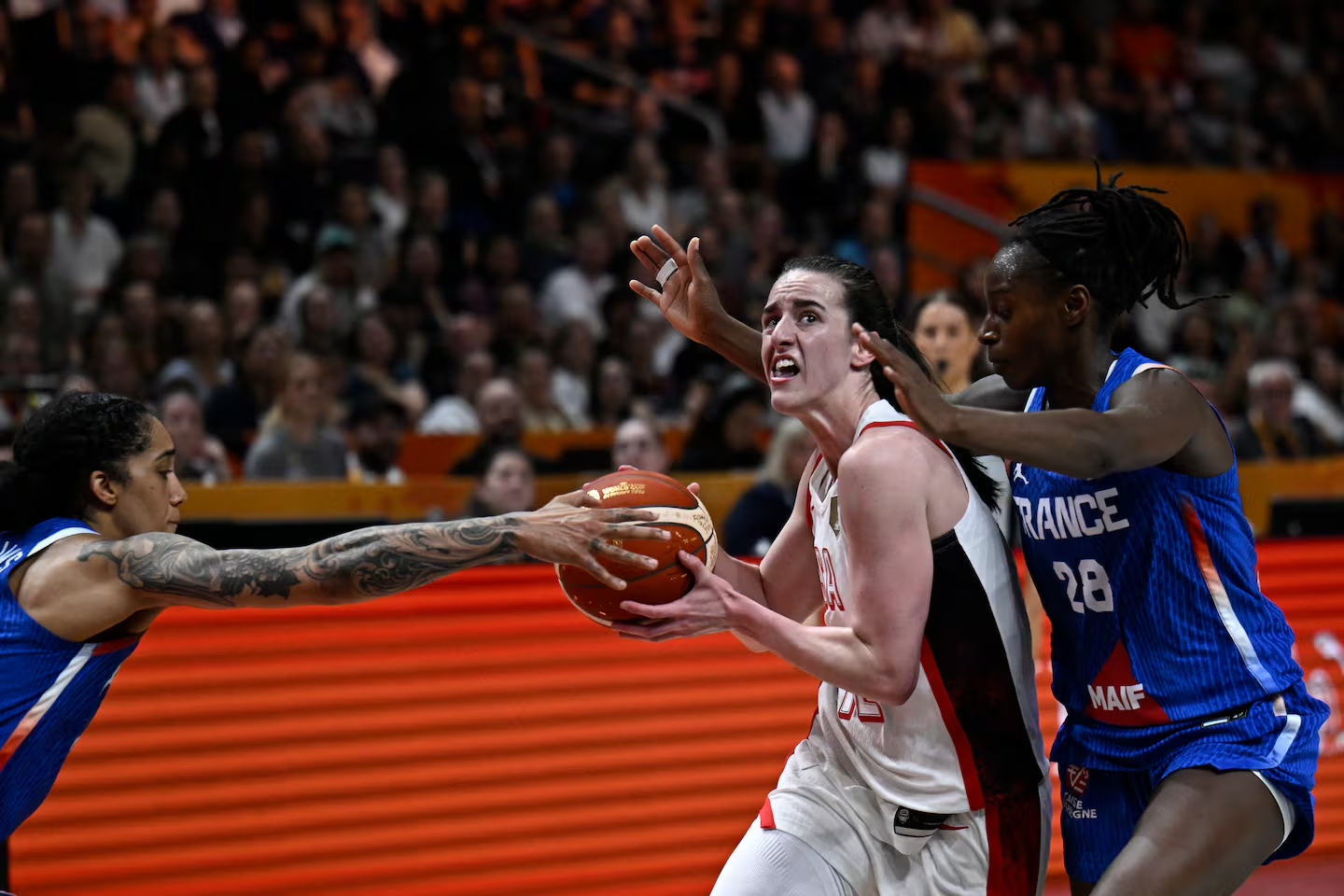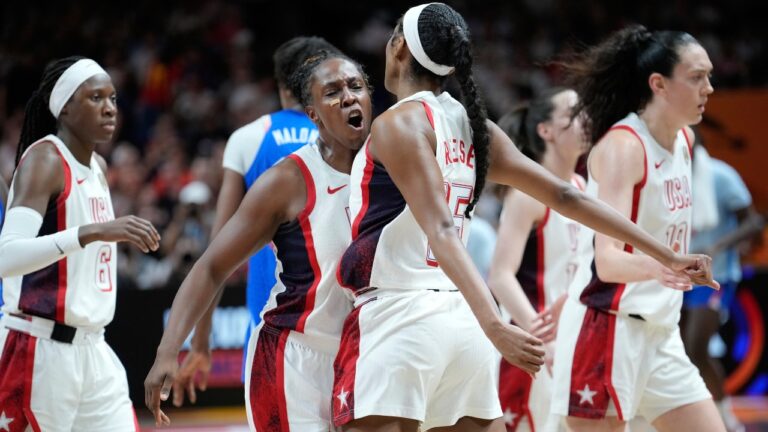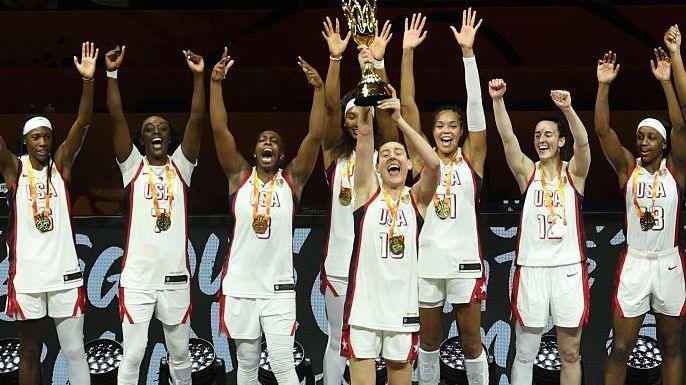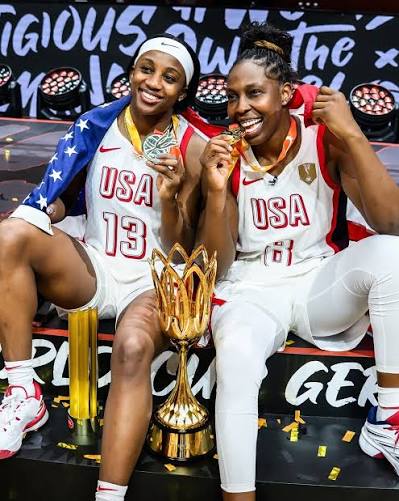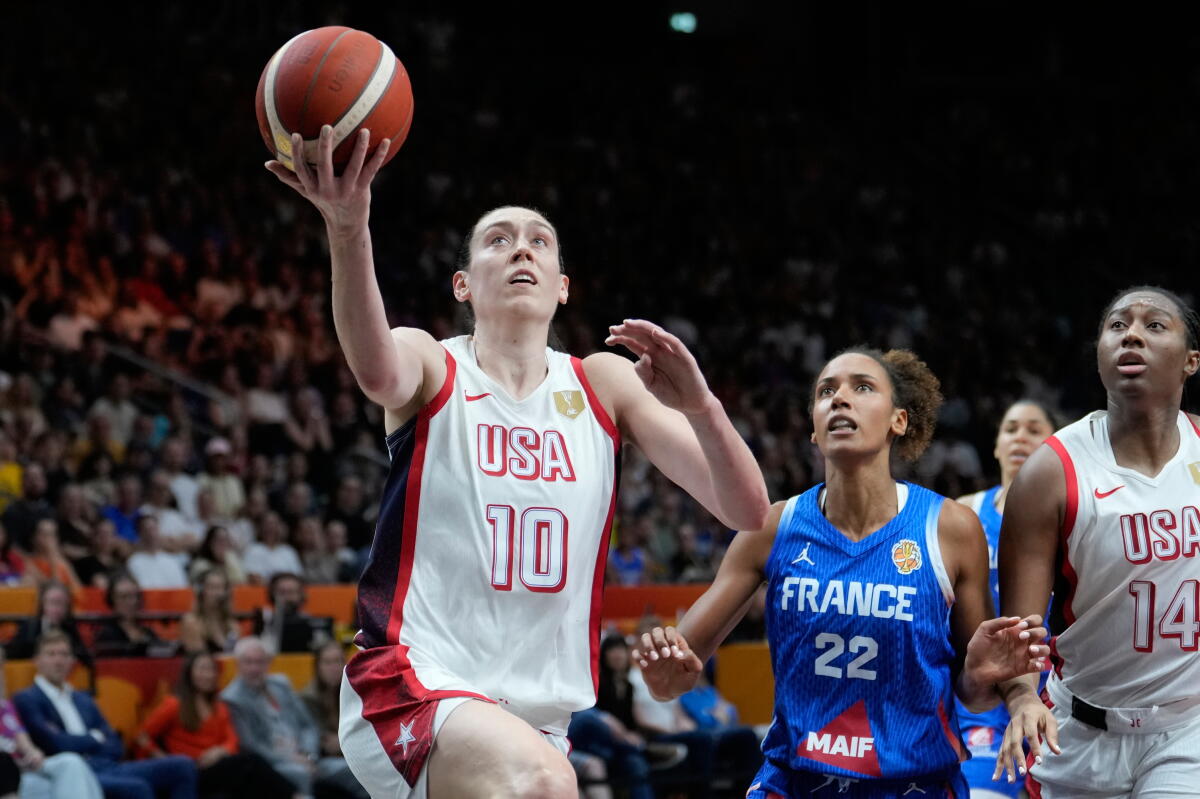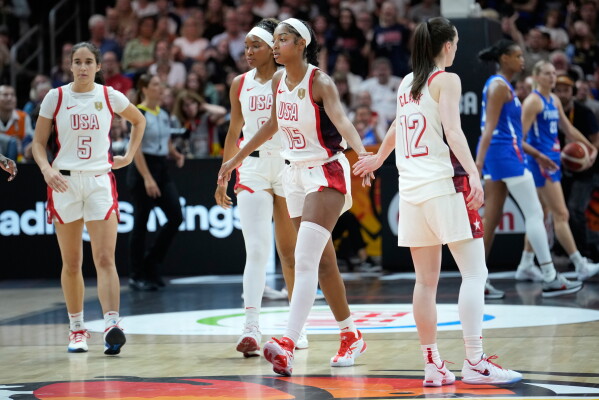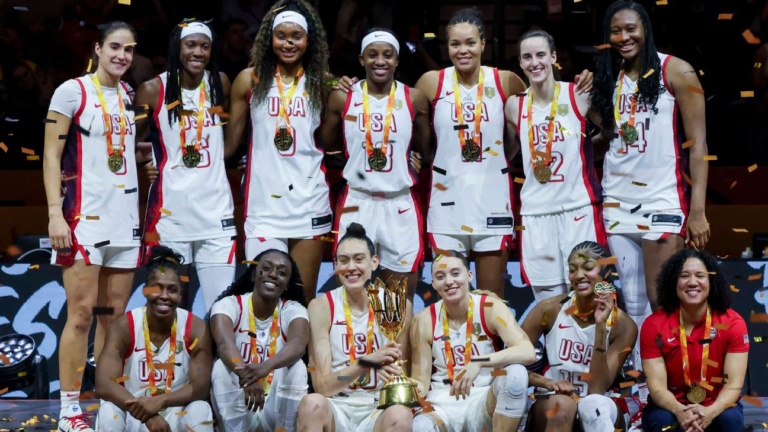
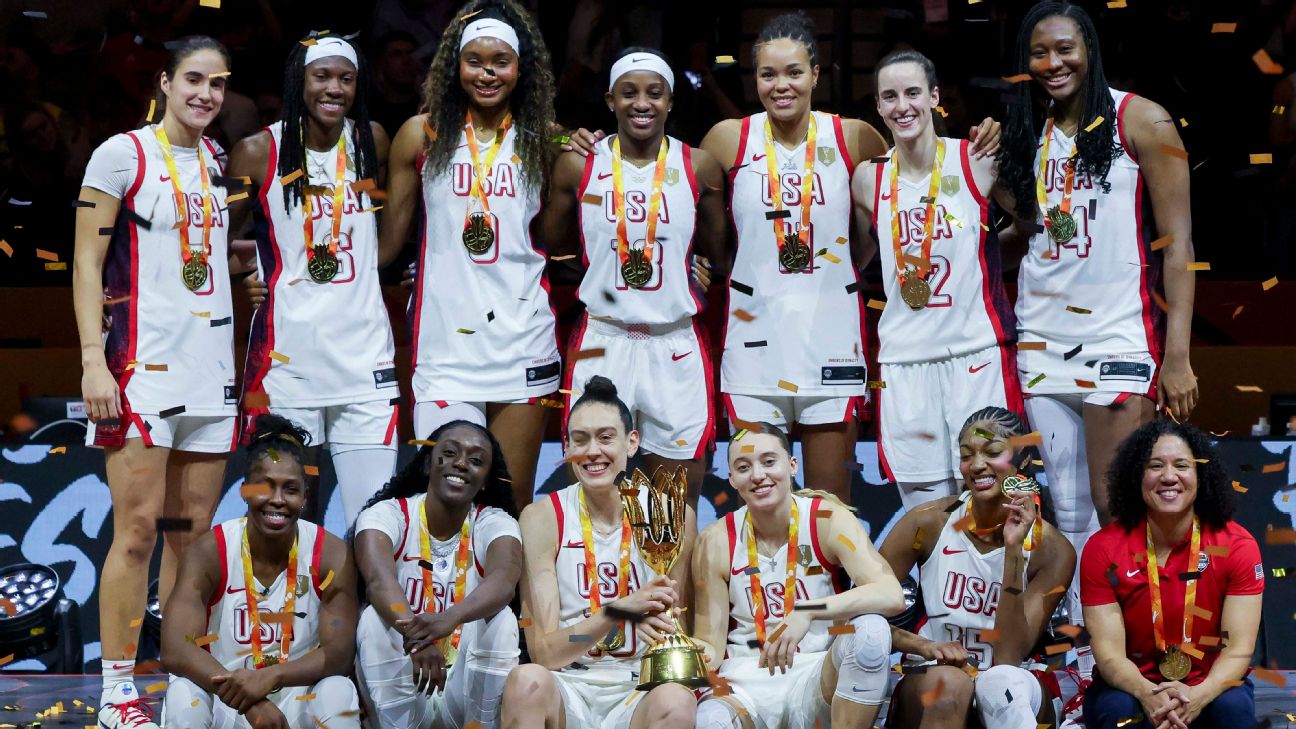
BERLIN, GERMANY — The United States women’s national basketball team added another historic chapter to its international legacy on September 13, 2026, defeating France 97–79 in the FIBA Women’s Basketball World Cup final at Berlin Arena.
The victory secured the United States’ fifth consecutive FIBA Women’s Basketball World Cup championship and its 12th World Cup gold medal overall. The Americans also extended their World Cup winning streak to 36 consecutive games.
What made the championship especially memorable was the way the United States earned it. France controlled significant portions of the first half and built a 14-point lead, but the Americans dramatically changed the game after halftime, outscoring France 30–12 in the third quarter before closing out the championship with a 24–22 fourth quarter.
A Championship Comeback in Berlin
The final began with France showing why it had reached the gold-medal game.
France led 20–17 after the opening quarter, and its pressure continued into the second period. The French side opened the second quarter with an 8–0 run, extending its advantage to 28–17 and forcing the United States to call timeout.
France eventually pushed its lead to 14 points.
The Americans, however, responded before halftime.
The United States went into the locker room trailing 45–43, keeping the deficit within a single possession after a challenging first half.
The third quarter became the decisive turning point.
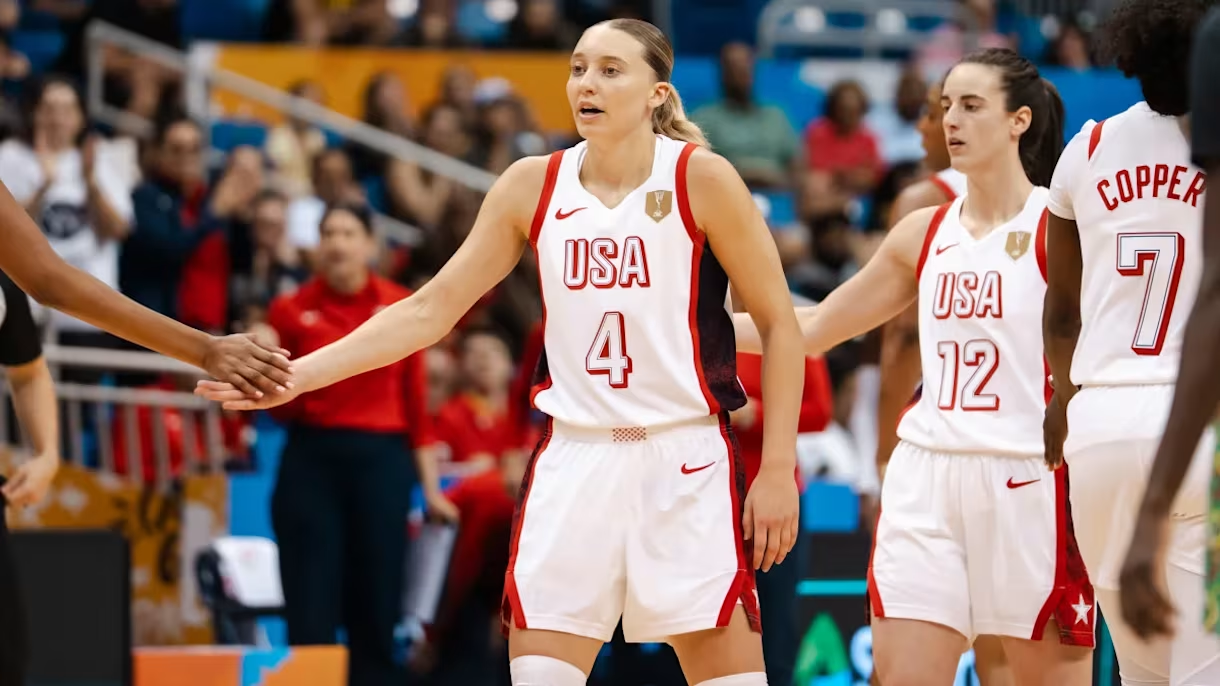
A Dominant Third Quarter Changes Everything
The U.S. defense tightened, while the offense began operating with greater efficiency.
The Americans scored 30 points in the third quarter while holding France to 12, transforming a two-point halftime deficit into a 73–57 lead entering the fourth quarter.
That 16-point swing became the foundation of the championship victory.
FIBA’s official statistics show the United States shot 56 percent from the field, compared with France’s 48 percent. The Americans also shot 42.1 percent from three-point range and 68 percent from the free-throw line.
The U.S. never surrendered its lead after taking control in the third quarter.
France continued to compete in the final period, scoring 22 points, but the Americans matched the effort with 24 points and completed the 97–79 victory.
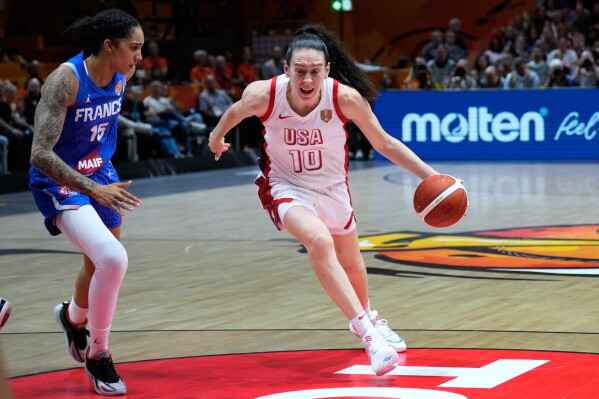
Breanna Stewart Leads the Way
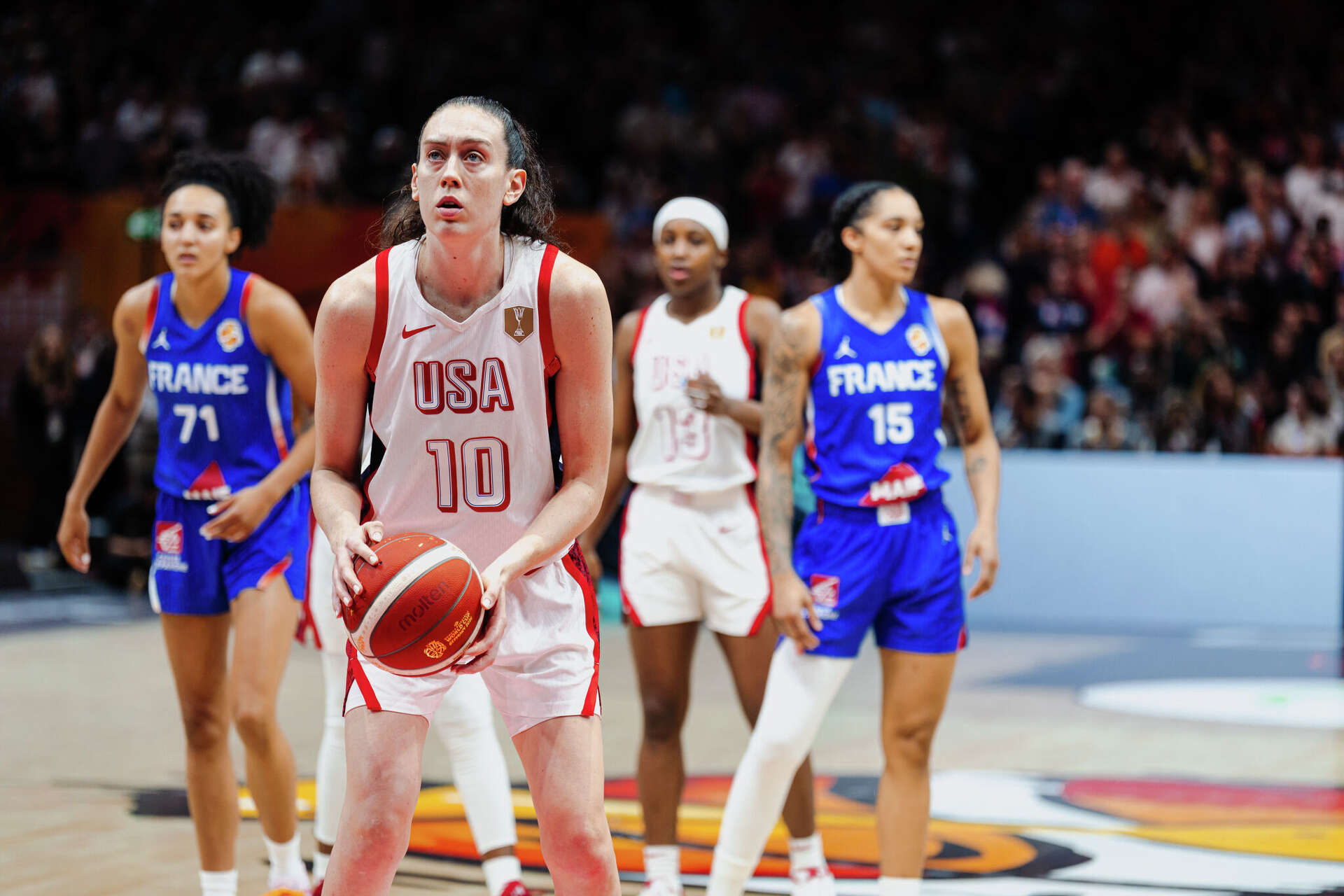
One of the defining performances of the championship came from Breanna Stewart.
The U.S. star finished the final with 22 points and 10 rebounds, producing a double-double on the biggest stage. USA Basketball identified Stewart as a central figure in the Americans’ championship performance.
FIBA’s official game data also lists Stewart as the game’s leading efficiency performer, with an efficiency rating of 30.
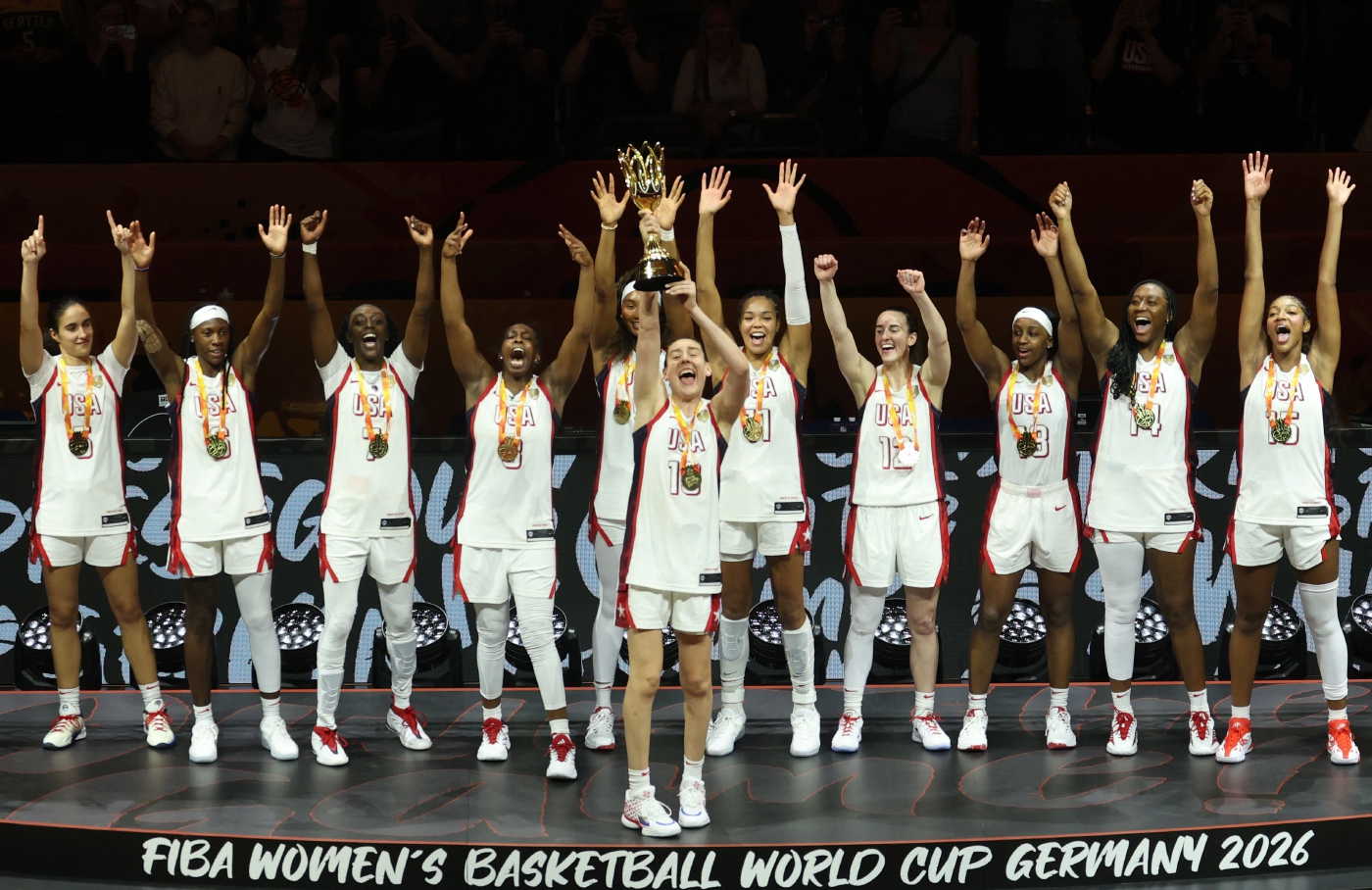
For Stewart, the 2026 championship added another major international achievement to an already decorated career. She lifted the Women’s World Cup trophy for the fourth time.
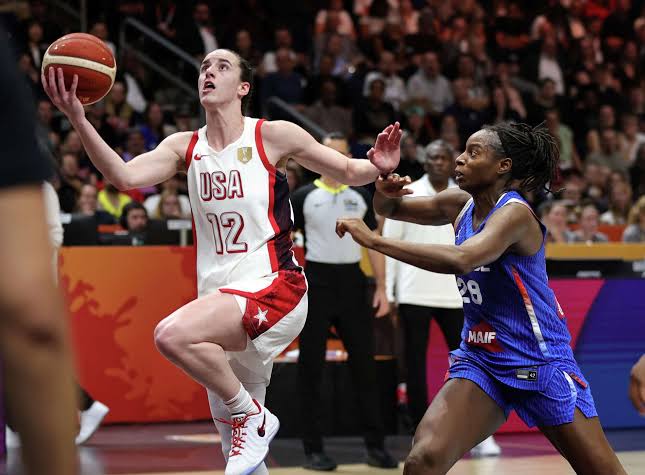
Jackie Young Provides an All-Around Performance
Jackie Young also played a major role in the championship victory.
Young finished with:
- 18 points
- 6 rebounds
- 5 assists
Her ability to contribute in multiple areas helped the United States maintain its momentum during the second half.
The performance reflected the depth of the American roster, with the championship not depending on one player alone.
France Presents a Serious Challenge
Despite the final score, France made the championship game highly competitive.
France entered the final after winning its first five games of the tournament by an average margin of 35.6 points, with none of those victories coming by fewer than 22 points.
France’s confidence was evident from the opening minutes against the United States.
Dominique Malonga led France with 23 points, according to FIBA’s official game statistics.
France’s first-half performance demonstrated the growth of the country’s women’s basketball program and its ability to compete against the world’s most successful international team.
The silver medal represented France’s best-ever finish at a Women’s Basketball World Cup.
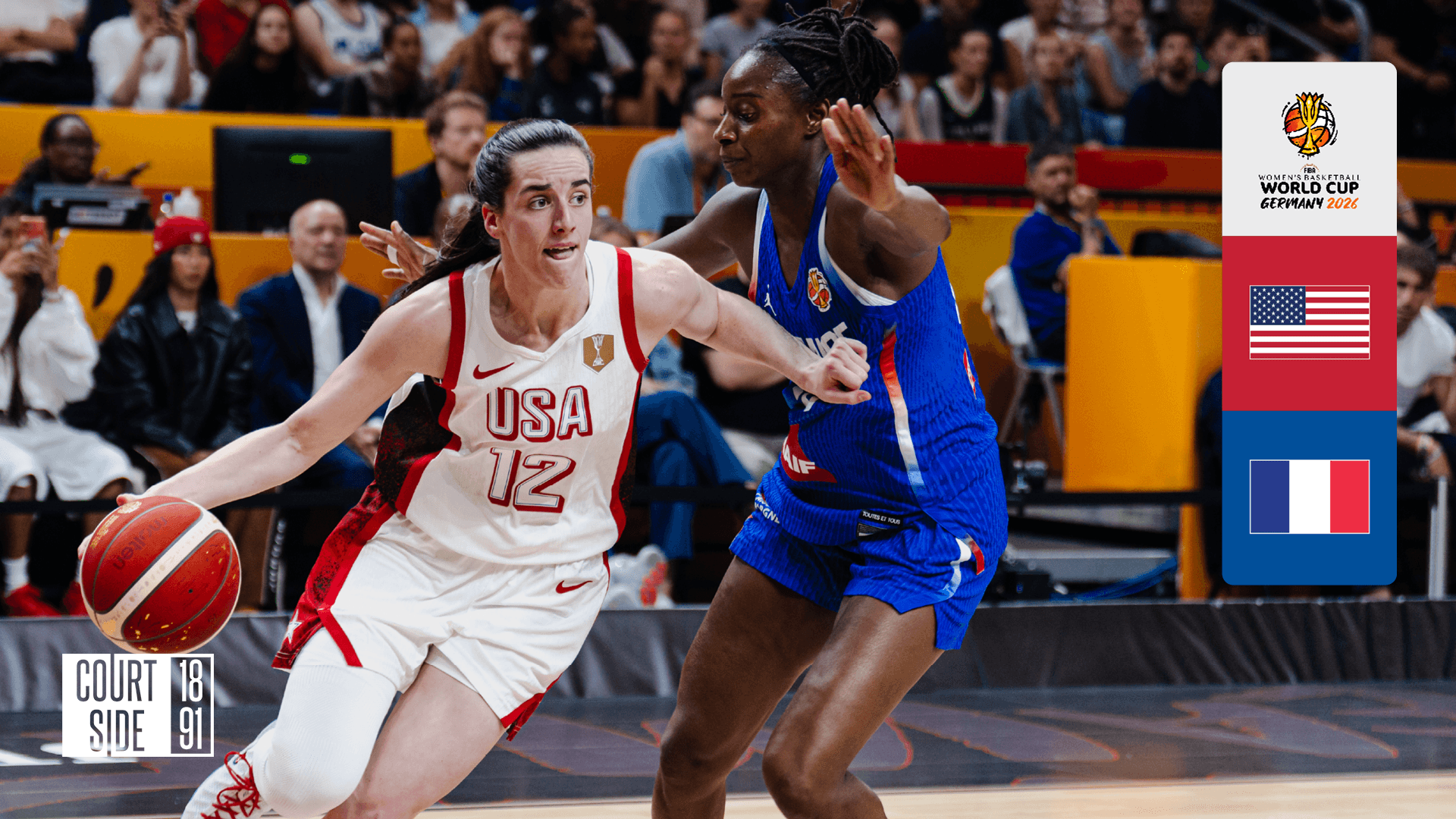
The Numbers Tell the Story
The final statistics demonstrate how dramatically the game changed after halftime.
| Category | USA | France |
|---|---|---|
| Final Score | 97 | 79 |
| 1st Quarter | 17 | 20 |
| 2nd Quarter | 26 | 25 |
| 3rd Quarter | 30 | 12 |
| 4th Quarter | 24 | 22 |
| Field Goal % | 56% | 48% |
| 2-Point FG | 62.2% | 50% |
| 3-Point FG | 42.1% | 45.8% |
| Free Throws | 68% | 64% |
The third quarter was the clear statistical turning point: USA 30, France 12.
The final was played before 12,233 spectators at Berlin Arena.
Another Milestone for USA Basketball
The championship extends an extraordinary run for the United States women’s national team.
The Americans have now won five consecutive Women’s World Cup titles, while their World Cup winning streak has reached 36 games.
USA Basketball also reported that the team extended its combined winning streak across the FIBA Women’s World Cup and Olympic competition to 72 games.
The United States’ 2026 championship came after defeating Spain 76–66 in the semifinal. France reached the final by defeating host Germany 86–64 in its semifinal.
A New Generation Shares the Stage
The 2026 championship was also notable because the American roster represented a blend of established international stars and players experiencing their first major senior 5-on-5 international tournament.
Seven of the United States’ 12 players had not previously played in a major international tournament, according to reporting following the championship. Among those players were Angel Reese and Paige Bueckers.
The transition between generations is an important part of the continuing story of USA Basketball.
Established players such as Stewart provided international experience, while younger stars gained their first opportunity to compete for a World Cup championship.
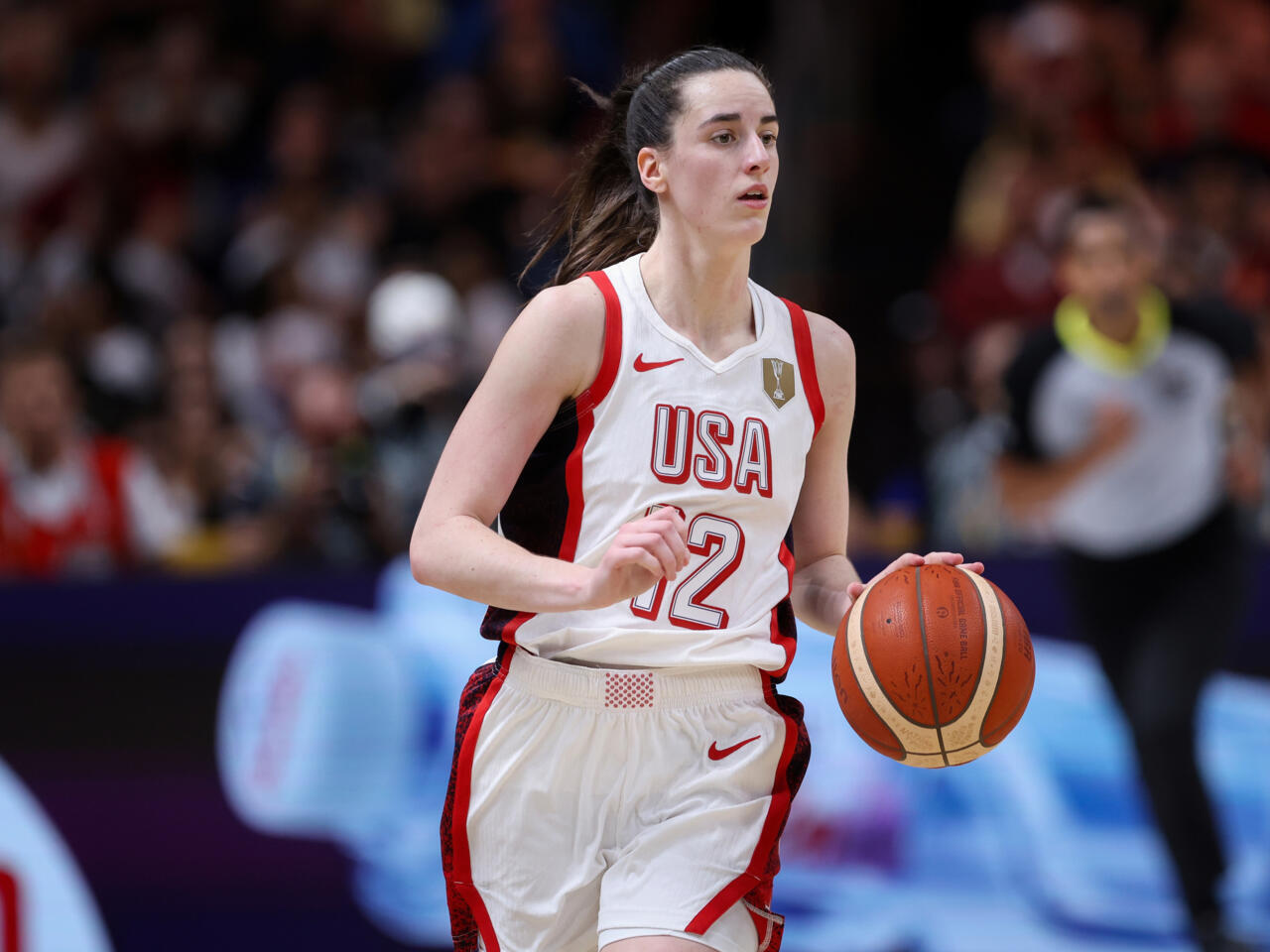
Caitlin Clark and the WNBA Connection
The 2026 World Cup also highlighted the increasingly close relationship between the U.S. national team and the WNBA.
The tournament featured 70 current and former WNBA players, more than twice the number involved four years earlier, according to Reuters.
That growing presence reflects the expanding global reach of women’s professional basketball and the role the WNBA plays in developing and showcasing elite talent.
The 2026 World Cup also came during an evolving international basketball calendar, with the tournament and WNBA season requiring greater coordination around player availability and recovery.
USA–France: A Rivalry Continues to Grow
The Berlin final was another major chapter in an increasingly significant basketball relationship between the United States and France.
The two nations had already met in the women’s Olympic final at the Paris 2024 Olympic Games, where the United States narrowly defeated host France 67–66.
Two years later, they met again for a world championship.
This time, France held an early lead, but the United States produced the decisive second-half response and won by 18 points.
The matchup demonstrates how France has continued to establish itself among the leading nations in international women’s basketball.
Berlin Becomes the Setting for Another Historic U.S. Celebration
When the final horn sounded at Berlin Arena, the American players celebrated another World Cup championship.
The trophy represented another achievement for a program whose international success spans generations.
From the established leadership of Stewart to the emergence of younger players, the 2026 team brought together different eras of American women’s basketball.
The result was another gold medal—and another chapter in one of international sport’s most successful team traditions.
Channel A TV: Celebrating Women’s Basketball
For Channel A TV, the 2026 FIBA Women’s Basketball World Cup represents the continued growth and visibility of women’s sports on the global stage.
The championship in Berlin brought together athletes from across continents and showcased the talent, competitiveness and international reach of women’s basketball.
The United States’ victory over France also highlighted the expanding global landscape of the sport, with France producing its best-ever World Cup finish and nations around the world continuing to develop elite women’s basketball programs.
The championship provides another reminder that women’s basketball is not simply growing—it is becoming an increasingly important part of the global sports conversation.
Final Score
🇺🇸 USA 97 — 🇫🇷 France 79
2026 FIBA Women’s Basketball World Cup Champions: United States
Venue: Berlin Arena, Berlin, Germany
Date: September 13, 2026
Attendance: 12,233
Final: USA 97, France 79
Third Quarter: USA 30, France 12
USA leading scorer: Breanna Stewart — 22 points, 10 rebounds
France leading scorer: Dominique Malonga — 23 points
USA championship streak: Five consecutive World Cup titles
World Cup winning streak: 36 games
The United States leaves Berlin with another gold medal, while France leaves with its best-ever Women’s World Cup finish and another significant step forward on the international stage.
Channel A TV — Connecting Communities Through Media, Sports & Storytelling.
#ChannelATV #USABWNT #USABasketball #WomensBasketball #FIBA #FIBAWomensBasketballWorldCup #WorldCup2026 #USA #France #BreannaStewart #JackieYoung #CaitlinClark #AngelReese #PaigeBueckers #WomensSports #Basketball #Berlin #Sports #GlobalSports